


Managing Director
Stainless steels are steel alloys with good corrosion resistance. Due to its beneficial properties, this material is used in numerous industries. However, its distinctive properties also make stainless steel more difficult to machine. In this blog post, you’ll learn more about the challenges and techniques involved in milling stainless steel, particularly the 1.4404 alloy.
Stainless steels consist of iron and a minimum of 10.5% chromium. Colloquially, they are often referred to as chrome steel. When exposed to oxygen, this forms a thin layer on the steel’s surface, which gives the material its corrosion-resistant properties. The material grades 1.4301 and 1.4305 are widely used. For specialized applications, such as in medical technology, 1.4404 chromium steel is preferred. This alloy is characterized by its acid resistance, making it ideal for environments that require regular disinfection.

Stainless steel 1.4404, also known as X2CrNiMo17-12-2, offers excellent weldability and corrosion resistance. Its low-carbon composition and the addition of molybdenum make it particularly resistant to intergranular corrosion. In addition, the material is suitable for use at temperatures up to 550°C. Stainless steel is robust, easy to maintain, hygienic, corrosion-resistant, and therefore particularly cost-effective. Due to its numerous advantages, additional surface treatment is rarely necessary.
Stainless steels (particularly those in the V4A group) are not easy to machine and require a great deal of experience when machined in a CNC milling shop.
Due to its low thermal conductivity, the heat generated during machining is not adequately dissipated through the chips. This creates a risk that the properties or shape of the steel workpiece will change if it becomes excessively hot. This can lead to work hardening of the machined areas. Stainless steel tends to warp and stick to the cutting tools during milling. For these reasons, cooling during machining is a critical factor.
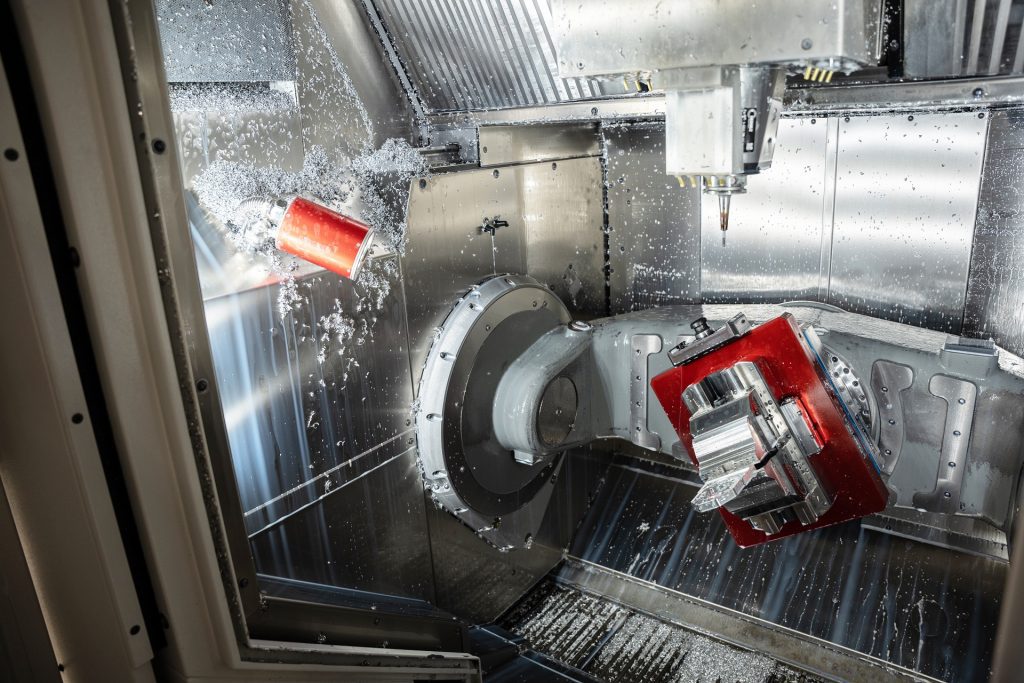
To meet the challenges of machining stainless steel, expertise and state-of-the-art CNC machining centers are essential. High-quality tools and precise cooling are particularly important when milling stainless steel. High-speed steel or carbide tools enable efficient machining while accounting for the material’s tendency toward work hardening. The correct selection of cutting tools and cutting parameters is crucial for the quality and efficiency of the milling process.
The versatile properties of stainless steel make it a popular material in various industries. Thanks to its strength, corrosion resistance, and hygienic properties, it is particularly well-suited for applications that require reliability and durability.
Milling stainless steel requires expertise, high-quality tools, and precise techniques. However, with the right processes and tools, even high-alloy steels such as 1.4404 chromium steel can be machined with precision and efficiency. The versatile applications of stainless steel make it an indispensable material in many industries—especially where precision and durability are required.
Heron CNC-Technik has established itself as a leading company in the machining of 1.4404 stainless steel. With state-of-the-art CNC milling machines and an experienced team of specialists, we offer precise and efficient solutions for demanding applications.
If you need milling services for stainless steel, such as grade 1.4404, or other machining techniques, we are here to help. Please contact us for more information and customized solutions tailored to your needs.